
After the Noncompete: Equity Plans That Build Your Next Owners
For a long time, the noncompete was the first line of defense for a closely held business. A key person signed one when they joined, and the worry about them walking out with your customers felt handled.
That comfort is fading. The federal ban on noncompetes came and went in less than two years, and the rules that remain change by state and by case. Owners who counted on a signed agreement to hold their best people are taking a second look, and many are landing in the same place: give those people a stake in what they help build.
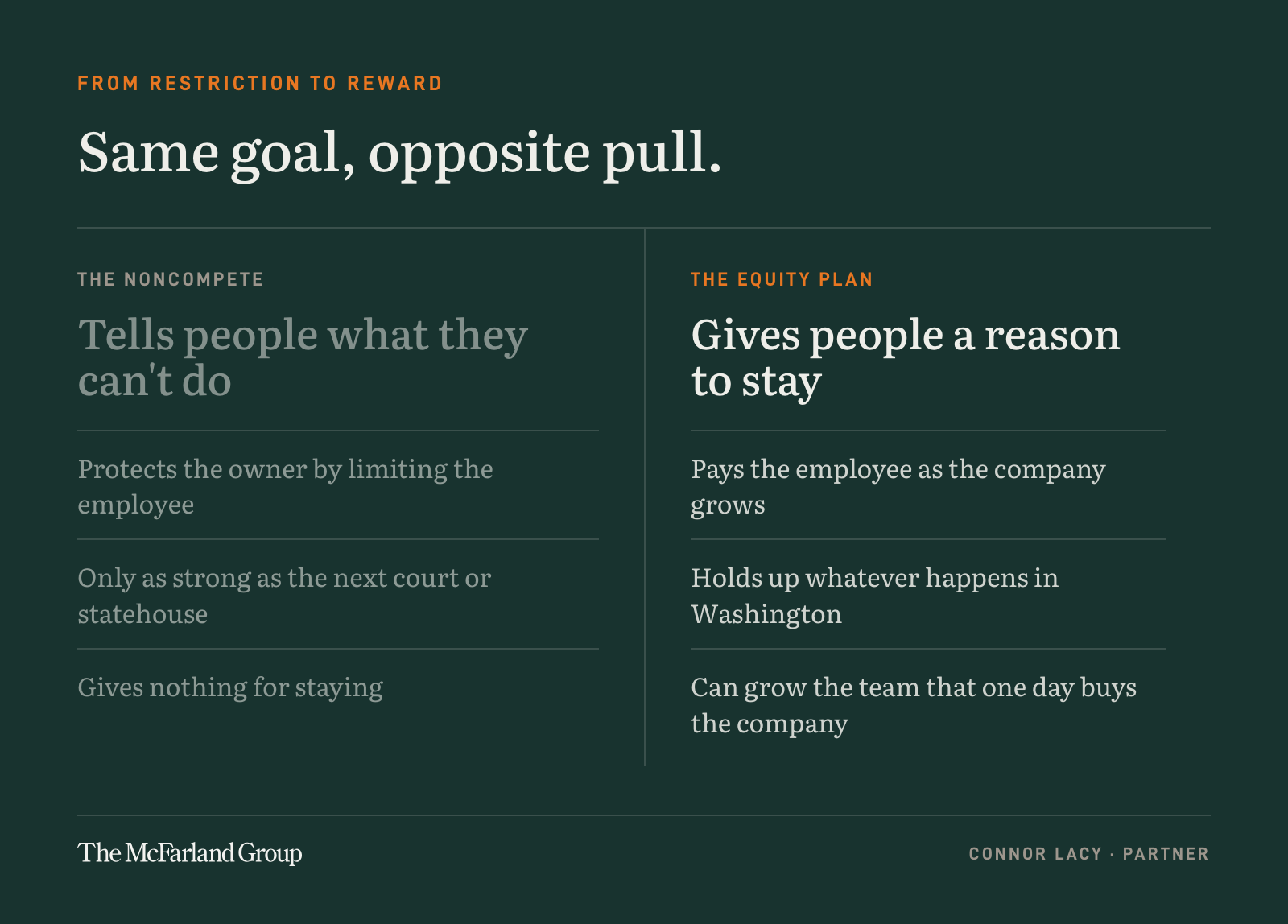
"For years, many owners treated the noncompete as their retention strategy," says Connor Lacy, a Partner at The McFarland Group. "But a noncompete only tells an employee what they can't do. A well-built equity plan gives them a reason to stay."
What changed, in plain dates
In April 2024 the Federal Trade Commission issued a rule banning most noncompete agreements nationwide. A federal court set the rule aside that August, before it took effect. The FTC dropped its appeals in September 2025, and in February 2026 the rule was formally removed from federal regulations.
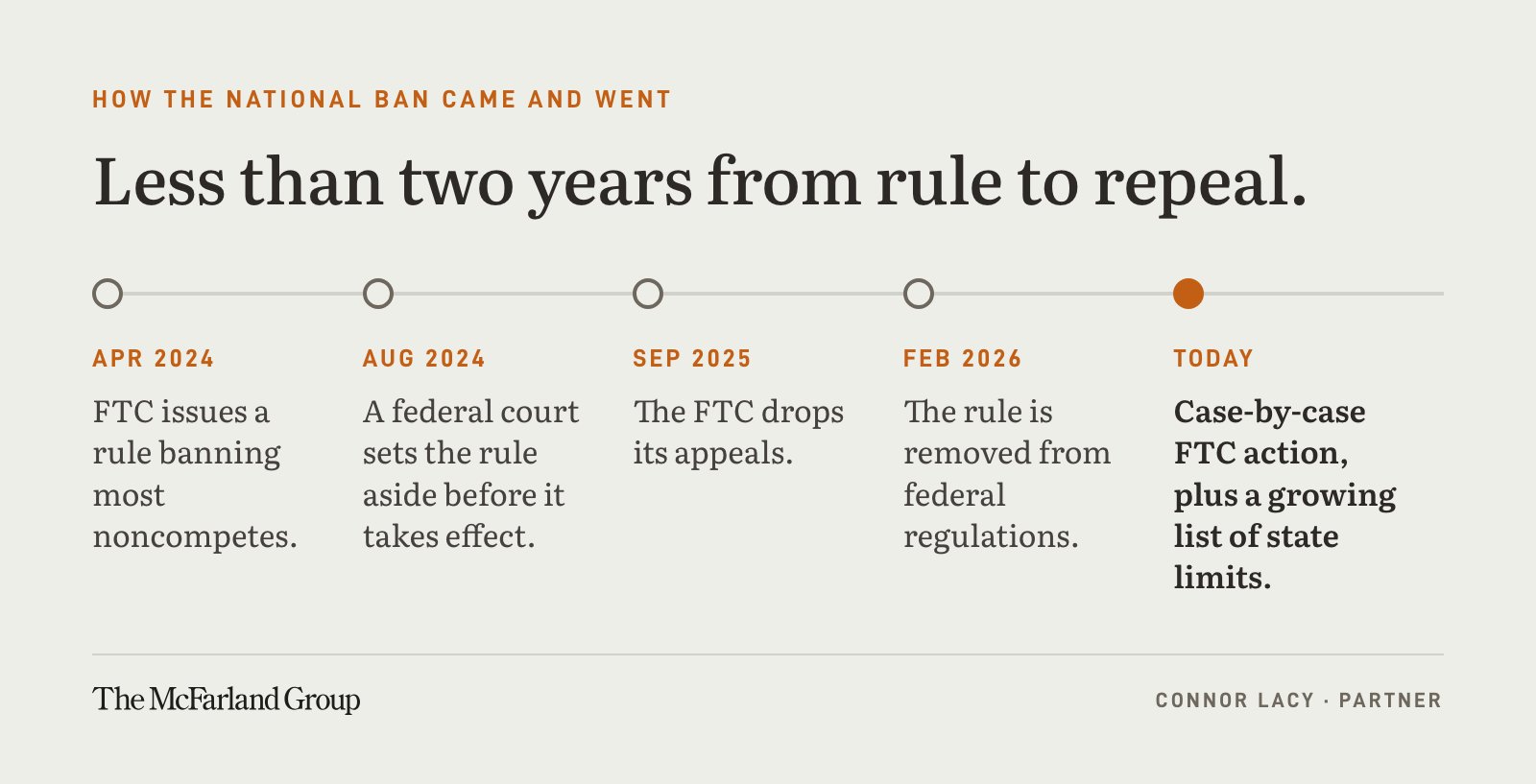
The national ban is gone, and noncompetes are on shakier ground than before it. The FTC now challenges employers one at a time. In late 2025 it settled with a pet cremation company that agreed to stop enforcing noncompetes covering about 1,800 workers. A growing number of states have passed limits of their own.
For an owner, the practical result is the same either way. You can no longer count on a signed noncompete to keep top talent in the building, or to keep customers from following them out the door.
Why the agreement was a thin plan to begin with
A noncompete works by limiting what someone can do after they leave. It gives them no reason to want to stay. And the person you most need to keep is usually the one with the most options.
Even when a noncompete holds up, all it can do is slow down a loss. The key employee who stays because leaving is hard is rarely the one who grows the business, trains the next layer of managers, or carries the company through a sale.
What owners are building instead
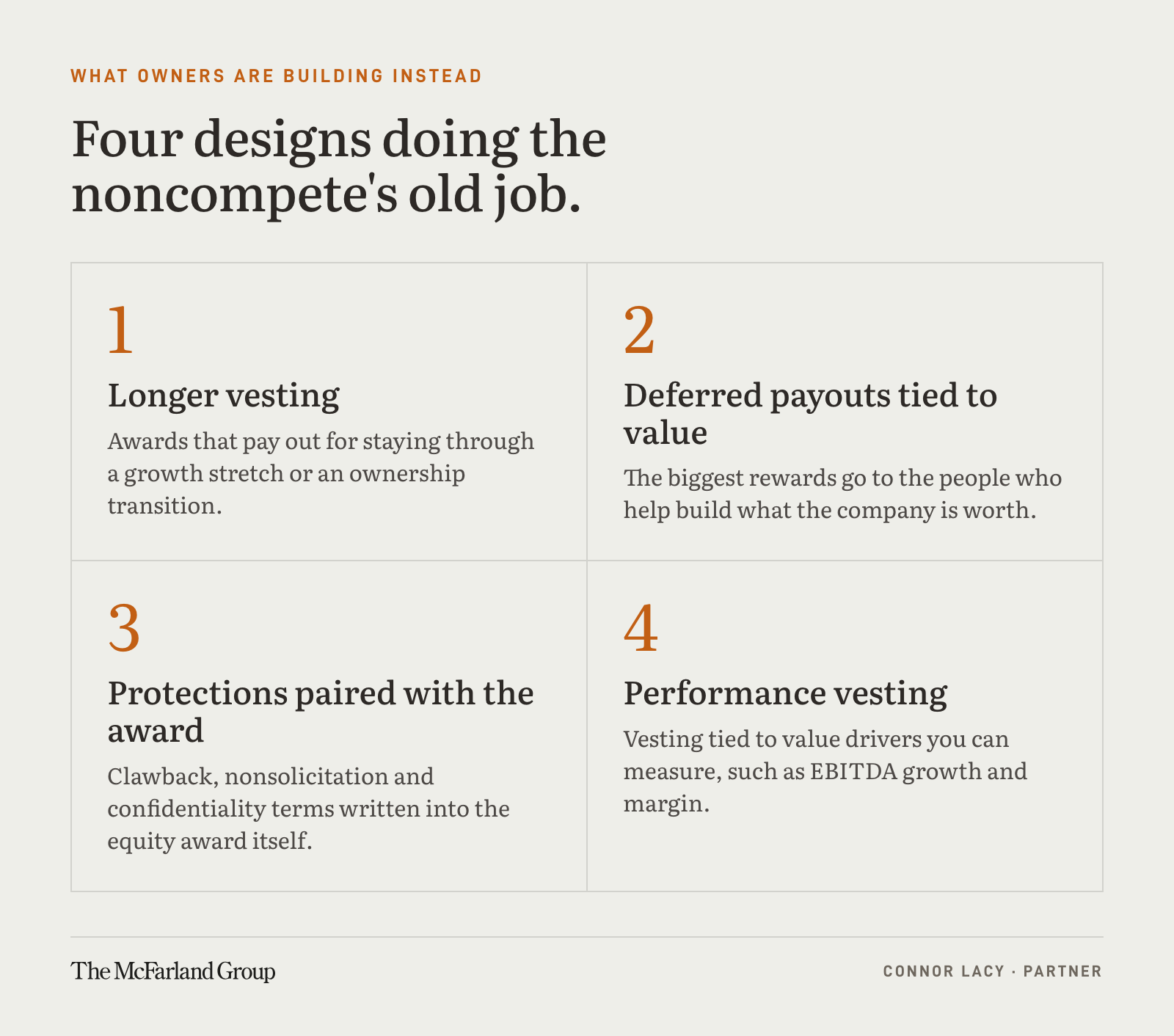
We are seeing clients redesign their incentive plans to do the work noncompetes used to do. Every plan is fitted to its company, but four designs show up again and again.
Longer vesting. Awards vest over a longer stretch, timed to reward people who stay through a key growth period or an eventual ownership transition. Leaving early means walking away from value already earned, and no court can set that reason to stay aside.
Deferred payouts tied to company value. Part of the reward is paid later and grows with what the company is worth, so the largest rewards go to the people who help build that value. Phantom stock is one common way to do it.
Protections paired with the award. Clawback, nonsolicitation and confidentiality terms can be written into an equity grant to protect customer relationships and confidential information. The employee accepts them as part of something they want to keep.
Performance-based vesting. Vesting is tied to value drivers you can measure, such as EBITDA growth and margin. People see a direct line between how the business performs and what they earn.
None of these tools is new. The job they are being asked to do is. If you want the instruments themselves side by side, we compare them in Phantom Stock vs. Restricted Stock vs. SARs.
The team that can become the buyer
The owners getting the most from this shift are looking past retention.
"The owners getting this right are using equity to build a management team that thinks like owners," Lacy says. "In many cases, that team can eventually become the buyer."
A business whose key people already share in its value is easier to transfer, to an outside buyer or to the team itself. An outside buyer sees value that is likely to stay after closing. A management team with a real stake has a head start on financing and running a management buyout. Connor writes more about that link in The Equity Plan That Makes a Sale Possible.
A retention plan built on shared value does two jobs at once. It keeps your best people now, and it prepares the business to change hands later.
What owners should do now
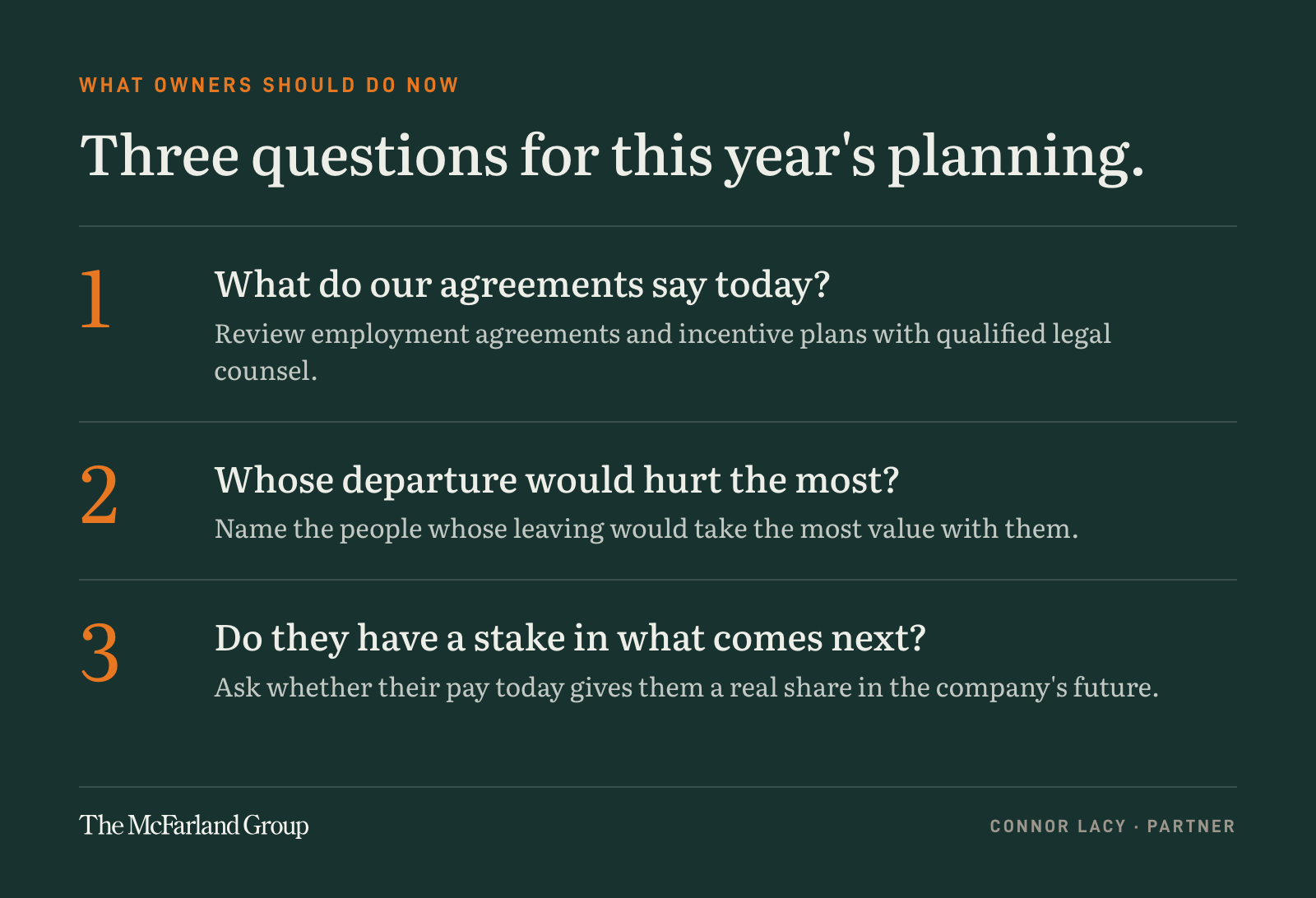
You don't need to tear up existing agreements to start. We recommend three steps.
- Review what you have. Go through existing employment agreements and incentive plans with qualified legal counsel. What holds up in your state is a legal question, and the answer may have changed.
- Name the people who carry the value. Identify the employees whose departure would most affect company value. For most closely held businesses it is a short list.
- Check their stake. Ask whether their current compensation gives them a meaningful share in the company's future. If the honest answer is no, start there.
"Regulation will keep changing," Lacy says. "A retention strategy built on shared value holds up whatever happens in Washington or the statehouse."
Our performance equity compensation work starts with the people and the value they carry, then designs the plan around them. When you're ready to think through the options, we're here.
Related posts

Know What Your Business Is Worth Before You Promise Equity
An owner who promises key people a percentage without knowing the range of value can give away far more than intended. Why the path and the range come first.
October 1, 2026 · 8 min read

The Equity Plan That Makes Your Business Worth More
Equity compensation can raise buyer confidence by tying key leaders to future company value before an ownership transition.
September 22, 2026 · 7 min read
Related Resources
White Papers
A side-by-side comparison of phantom stock and restricted stock, covering tax treatment, ownership impact, and practical administration for closely held businesses.
Phantom Stock with Profits InterestHow to combine phantom stock with a profits interest bonus to create a hybrid incentive plan, specifically designed for LLCs and partnerships where traditional stock plans don't apply.
Phantom Stock Plans: The Future of RewardsWhy phantom stock is replacing traditional equity awards in private companies, and what that shift means for owners who want to retain top performers without diluting ownership.
Understanding Phantom Stock PlansA ground-level introduction to phantom stock: what it is, how it works, and why business owners use it instead of giving away real equity.
Small Business Guide to Performance EquityA decision framework for small business owners evaluating phantom stock, SARs, restricted stock, and other equity-based incentive approaches.
Stock Appreciation Rights: Creating ValueHow stock appreciation rights work, when they make sense as a standalone plan, and how to design them so participants and the company both benefit.